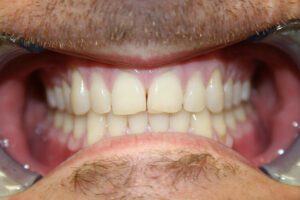
Tooth Sensitivity
July 28, 2008
A sensitive tooth can be really annoying, as it can cause many different sensations, from a little discomfort to acute pain. In some cases, it can be as disabling and challenging as a severe case of tooth decay.
This article aims to help you understand tooth sensitivity and aid you in preventing this undesired condition.
What Is Tooth Sensitivity?
Tooth sensitivity is a condition where a normal environmental agent, such as temperature or some flavors, triggers some degree of discomfort on one’s tooth. This discomfort can be from just a minor sensation, to a really sudden, sharp pain.
This condition is typically present when there are cavities, but sometimes tooth sensitivity presents itself without any visible sign of tooth decay.
Tooth sensitivity appears when the roots of one or more teeth are exposed, instead of being covered by the gums, as they should normally be. As these roots lack the protection of a resistant cover such as the enamel, foreign agents affect them directly.
Most common factors that trigger tooth sensitivity are hot or cold drinks or foods, and less common triggers are sweet, spicy or sour foods.
What Causes Tooth Sensitivity?
There are a number of factors that can lead to the development of tooth sensitivity. Some of them include:
Certain types of foods and drinks – Foods containing a great deal of acids (such as tomatoes, oranges and other citrus fruits, coffee, tea, foods containing vinegar, etc.) may lead to tooth sensitivity when consumed regularly without taking appropriate measures to prevent those acids from damaging the tooth’s enamel.
Pre-existing conditions – Diseases and other conditions can cause tooth sensitivity. Gingivitis, periodontal disease, a cracked tooth and cavities are all conditions that can provide a direct path between the environment and the root and nerve, resulting in tooth sensitivity.
Poor hygiene – Directly related to the development and proliferation of diseases, a poor mouth hygiene provides an ideal environment for bacteria and other bugs to grow, damaging not only gums and teeth, but the whole mouth.
Certain human actions – Some hygienic actions can indeed do more harm than good. For instance, brushing too vigorously or using a hard brush can cause the gums to detach themselves from the teeth, exposing the roots. It also can scratch the enamel, leaving tiny marks where bacteria can live. Acid mouthwashes, as well as certain peroxide-based tooth whitening products, can lead to sensitivity. Additionally, some surgical procedures may cause temporary tooth sensitivity as a side effect.
How Can I Fight Tooth Sensitivity?
You can reduce the risk of developing tooth sensitivity, and also decrease the discomfort it causes if you already are affected, by keeping some simple tips in mind:
Clean your mouth the right way – Use only brushes with soft bristles, and do not brush too vigorously. It’s better to brush slowly and thoroughly for five minutes than brushing fast and strongly for three. Also, use non-acid mouthwashes, and avoid those which contain too much alcohol. Choose fluoridated toothpaste, there are some great products aimed specifically for fighting tooth sensitivity.
Don’t let acids get into action – If you eat a lot of citrus and other vegetables (you should, they are healthy!), or use a lot of vinegar on your meals, then never forget to bring your toothbrush with you. Brushing after a meal significantly reduces the chances of tooth sensitivity.
Visit your dentist regularly – A professional can asses your current mouth’s status and give you exact instructions on what to do.
Keeping these things in mind will help you fight this awful condition, decreasing tooth sensitivity and preventing pain and discomfort.
We hope this article was helpful to you. See you soon!
Know Your Teeth
July 21, 2008
A human being with his full set of teeth in its place has a total of 32 pieces. They are not all the same, but they have different shapes, different structures and are intended for different purposes. Some types of teeth are more prone to certain diseases than others, depending mostly on their location within the mouth.
Here is a brief description of human’s teeth, to help you understand more of them.
How Many Types Of Teeth Are There?
A complete adult teeth set contains four different types of teeth. This differentiation is made based on the number of roots, on the shape of the tooth, and on the specific purpose of each group.
Incissors – The incissors are also known as the front teeth, or cutting teeth. A complete adult dentition has a total of eight incissors. The four lower incissors are typically a little stronger then the upper ones. Incissors have single conical roots, flat surfaces and end in a sharp edge, suited for biting, chopping off and cutting the food. They are placed in the front of your mouth.
Canines – Canines are usually referred to as “fangs”, especially the upper ones. There are 4 canines in a complete adult set. They have a single conical root each, as well as a conical, pointed-edge crown. Both root and crown are larger than those of the rest of the teeth. Canines are designed to shred and tear the food, and are much stronger than other types of teeth. They are located next to the incissors.
Bicuspids – They are called premolars. There are eight premolars in a complete dentition. Their purpose is to chew food, mixing them with saliva to form a paste that can be easily swallowed and digested. They have a crown with two small pyramid-shaped protuberances (called cusps, hence the name “bicuspids”), and they may have either one or two roots. They are found in groups of two, next to and behind each canine tooth.
Molars – These are the backmost human teeth. They are located next to the premolars. A complete dentition has twelve molars, distributed in sets of three (the first molar being the one next to a premolar, and the third molar, also known as “wisdom tooth”, being the one in the back of the mouth, the last piece of the teeth set). Molars have 2 or four roots, and a flat surface ideal for grinding the food as a final step before swallowing.
Different Problems For Different Teeth
Although all teeth are basically affected by the same problems, their specific location inside the mouth sometimes makes them more exposed to certain problems than to others.
Incissors, for instance, are the frontmost teeth, and as such they are visible at plain sight, making any potential problem visually detectable. For this reason, cavities are much less seen on incissors than on other teeth, mainly because any anomaly can be detected and treated promptly.
Canines, on the other hand, have a greater incidence of breaks. This is because they are used to shred and tear, and their strength is sometimes “abused” by trying to deal with hard elements that don’t have much to do with feeding. It is not uncommon to see people that broke their canines trying to do things like taking a cork out of a bottle, or loosening a bolt!
Molars and premolars are the back of the mouth, which makes them are less visible at plain sight. It’s easy for cavities to remain undetected on them, until the pain appears. In addition, there are some problems associated to third molars, the “wisdom teeth”.
It is important to keep in mind that no matter on what tooth is a problem located; your dentist will be able to detect it before it becomes a painful issue. Visiting a dental professional on a regular basis is the smartest thing you can do to protect your teeth.
See you on our next article!