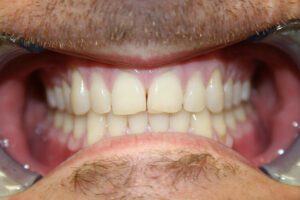
Tooth Implants Are Better Than Bridges And Crowns

September 22, 2008

Whenever we come across an oral condition which needs to be addressed, there is normally more than one option to choose from. Although the dentist is able to make the right decision regarding the right treatment, sometimes we are given the freedom to choose the treatment ourselves. Tooth implants are relatively new and not many people go for this treatment because of the complexities involved. Since these are artificial tooth roots which are used to replace the entire tooth, including the root, extraction of the original root is often required which is a painful procedure.

Despite these complications, tooth implants are considered a better option than bridgework, crowns or partial dentures. Although crowns are used to complete the procedure of implants, they are not used alone when the decay or damage to the tooth is too severe. With the advancement in medical technology and the introduction of new and more sophisticated tools and machines, tooth implants have become a very common practice for a dentist. The biggest advantage of implants over other treatments is that they are permanent solutions and may last for a lifetime if properly applied.

If we study the literature, we find that dental implants have a very high success rate - up to 92%. Complications only occur if the dentist is inexperienced or has not been able to rightly diagnose your problem. Otherwise, the procedure is meant to be totally safe and reliable. A tooth implant is very secure and durable. This procedure is often used in cosmetic dentistry for a complete smile makeover in addition to veneers, bonding and fillings.

Another reason for the superiority of dental implants over other procedures is the material used in the making of artificial tooth roots. Normally titanium is employed to manufacture artificial roots which is a very light weight and durable metal. In addition to this, other effective metals are also added to pure titanium to make it stronger and longer lasting. Most people do not develop any adverse reactions, allergies or infections to the implanted tooth made of titanium. This is another reason which makes dental
implants more suitable than other treatments.

Bridgework requires the support of neighboring teeth in order to be fully applied. Furthermore, bridges are not helpful in sustaining braces or other dental appliances for a long time when there is a need to correct the alignment of crooked teeth. Dental implants, on the other hand, have been found to be very useful in this regard. If you do not want to wear removable dentures, tooth implants will prove to be the most effective and long lasting treatment for your missing teeth.

However, to complete the procedure of dental implants, bridgework, bonding and crowns are often required. For this you may need the services of more than one dentist including an oral surgeon and a periodontist. Because of this reason, implants are more expensive than other ordinary dental or cosmetic procedures. But if we consider their long-term benefits, we find that this investment is very cost-effective. A tooth implant is by far the most beneficial treatment for the replacement of missing, broken or decayed teeth and it has been found to be better than all other alternatives
available in dentistry.

What is Restorative and Cosmetic Dentistry?

September 15, 2008

Restorative dentistry involves the use of crowns and bridges to restore a person’s smile by replacing broken, crooked or decayed teeth. Cosmetic dentistry, on the other hand, deals with improving the aesthetics of the mouth by using certain dental procedures such as bonding, fillings and implants. Although both these types involve the use of restorative methods to improve the appearance of the teeth, they are considered two separate branches of dentistry. While crowns and bridges are often required for the treatment of common teeth problems and oral diseases, cosmetic procedures are merely employed for the improvement of the smile.

Restorative methods are required to complement fillings, bonding and implants. Because of this reason, restorative and cosmetic procedures are used in relation to one another. But many a times only crowns or bridges may prove to be sufficient to complete the job of restoring natural teeth. Crowns are usually used to repair a single decayed or broken tooth. There are many types of crowns depending on their material and the function they perform. Crowns are also used as an alternative to fillings because amalgam fillings are now considered dangerous for health.

Crowns and bridges are commonly employed to prevent deterioration of gum disease or other oral conditions. As such these treatments serve to strengthen a tooth and put a stop to further decay. A dental crown may be prescribed by a dentist to improve the appearance of a repaired or restored tooth. Normally porcelain crowns are used for the front teeth because this material is very close in resemblance to the natural tooth color. But this type of a crown is usually used for improving the appearance of the teeth and therefore porcelain veneers can prove to be a better option in such a case.

This brings us back to cosmetic dentistry. Veneers are very commonly used by cosmetic dentists to repair chipped, stained and decayed teeth. This procedure is totally painless and less expensive as compared to other cosmetic and restorative procedures. Porcelain veneers are used in a complete smile makeover to give a natural look to the teeth and also to prevent further decay and damage. People who have severely discolored teeth due to overuse of tobacco products, tea and coffee should opt for porcelain or other types of dental veneers.

A dental bridge, which is a restorative method, is used to restore a person’s ability to properly chew and to fill the gaps between teeth. There are many types of bridges currently in use by the dentists. Traditional bridges are made up of porcelain or other ceramic materials. Some bridges also require the use of metal structures to hold them in place. Bonding is used to complete bridgework and to support the newly implanted teeth.

Although many of the above mentioned dental treatments are similar in terms of functionality, they are entirely different from one another in terms of materials used and the overall procedure. They are also different in the context of price. Cosmetic procedures usually require the services of more than one dentist and therefore they are more expensive than traditional dental procedures. However, your dentist will be able to tell what type of procedure is required to completely cure your particular oral condition.

How You Can Overcome Your Fear of the Dentist

September 8, 2008

We often feel stressed before an appointment with a dentist. The thought of going through a routine check-up or a dental procedure makes us nervous and uncomfortable. Many people suffer from dental phobia or fear of the dentist. Because of this condition they refuse to go through any dental procedure that involves the use of needles or drills. This is also termed as dental anxiety and it’s a very common problem among adults as well as children. However, now there are methods available that can help you overcome your fear of the dentist. These methods come under a branch of dentistry known as sedation or sleep dentistry.

In sedation dentistry the patient is put to a sleep-like state so that he or she cannot feel the pain. Although the name is “sleep dentistry”, the patient, in most cases, is fully awake and conscious throughout the procedure. However, he or she cannot feel the pain or move reflexively because of the sedative being given. There are basically five types of sedation methods used to create this sleep-like state. They all come under pain-free dentistry and allow a smooth and painless procedure to be carried out by the dentist.

These methods include inhalation sedation, intravenous sedation, intramuscular sedation, oral sedation and deeper sedation. The first four of these methods come under conscious sedation dentistry because the patient remains conscious during the procedure. The last one requires the use of general anesthesia to put the patient into a deep sleep such that he or she is not aware of what is going on. However, this type of sedation is normally not employed for dental procedures as they are not that much painful. But sometimes when the dental phobia is difficult to control, this method might be prescribed by the dentist.

To overcome the dental phobia, you can opt for oral or inhalation sedation dentistry. Both these types are harmless and do not require the use of heavy drugs. In oral sedation method, the patient is given an oral sedative before the treatment. This drug helps to put the patient into a relaxed state of mind such that when the actual treatment starts, he or she is not able to feel any sensation or pain. Inhalation sedation works in a similar manner. This method involves the use of nitrous oxide, or laughing gas, which is inhaled before the treatment. Most patients with dental anxiety are given this type of sedative as it does not have any side effects and is very easy to use.

Intravenous sedation is used as an alternative to oral sedation when the procedure involves the use of needles or other surgical instruments. Usually people are terrified of the dental equipment and to have power over the reflexive or uncontrollable movements of the patients, dentists usually use intravenous sedation. Although it is a common notion that this type of sedation is very close to deeper sedation in which the patient has no recollection of what happened later on, in intravenous sedation the patient is fully awake and it is also a safe method.

Another type of method used to overcome dental phobia is known as intramuscular sedation method. This method does not involve the use of oral sedatives or intravenous drugs. It merely involves injecting a mild sedative drug into the patient’s muscle. This procedure is normally used for children as it brings about the sleep-like state very quickly.

5 Procedures Covered by Cosmetic Dentistry

September 5, 2008

Cosmetic dentistry involves certain procedures like teeth whitening and dental veneers that help to improve a person’s smile. The procedures covered by cosmetic dentistry are often combined for a complete smile makeover. This is often employed by people who want absolute confidence over their smile and the appearance of their teeth. Another option to consider in cosmetic dentistry is known as full mouth reconstruction which may involve the use of braces or other devices to correct the alignment of the upper and lower jaw and to straighten uneven or crooked teeth.

The 5 procedures covered by cosmetic dentistry that we are going to discuss in this article are: dental fillings, dental implants, veneers, teeth whitening, and bonding. Sometimes alternatives to these procedures may be required in order to gain maximum benefits from smile makeover. These include the use of dental crowns or bridges to fill gaps between teeth and to prevent further tooth decays or deterioration of gum disease. Crowns and bridges belong to another branch of dentistry known as restorative dentistry. For now let us concentrate on the five procedures mentioned above and see what they are all about.

1. Dental Fillings: This is a relatively inexpensive procedure as compared to the more complex dental crowns or bridges for the treatment of decayed, broken or injured teeth. The cavities are filled by using porcelain or other similar materials which resemble the natural appearance of teeth. In case if fillings fail to solve the problem completely, dental implants or bonding might be required.

2. Dental Implants: We may lose one or many of our teeth due to several reasons like decay, injury, periodontal disease, neglected oral hygiene etc. Dental implants are artificial teeth used to restore the functionality of missing teeth. As a result, they also help to fill out the gaps and improve a person’s smile and overall appearance. Dental implants involve a rather complex procedure which often requires the assistance of an oral surgeon.

3. Veneers: Dental veneers, or more commonly porcelain veneers, are quickly gaining in popularity. A veneer is an ultra-thin layer of porcelain or some other material, which is used to cover the surface of a chipped, stained or slightly broken tooth. This procedure is now widely used to correct these common problems and to improve the aesthetics of the mouth. A dental veneer may be required as an alternative to dental bonding or to complement the latter. Porcelain veneers look exactly like natural teeth and they last for a long time without becoming discolored.

4. Teeth Whitening: Teeth whitening is a very effective and useful procedure. It is a purely cosmetic process which is merely used to improve the appearance of discolored or stained teeth. Staining can occur as a result of regular smoking, drinking tea or coffee, and not taking care while brushing or flossing. You can also perform this procedure at home by using teeth whitening kits widely available on the market. However, it is normally used as a complementary procedure by the dentists in a smile makeover.

5. Bonding: Dental bonding is yet another option available to dentists to solve the problem of broken or chipped teeth. This procedure is required to complement almost all other restorative procedures such as crowns, bridgework and implants. Gaps between teeth can also be filled by using bonding. However, the main use of this dental procedure is to hold the new teeth in place.