Treatments Of Gummy Smile: A Complete Guide For Achieving Perfect Smile

November 23, 2009

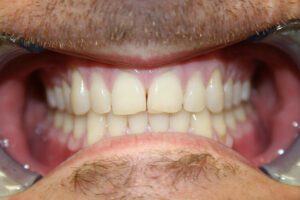
For many people a full smile with bright white teeth is not possible. A lot of teeth with small red gums are shown when they smile. It is presumed by them that they have short teeth or that their gums have grown over their teeth. In the perfect smile, the upper lip sits just above the top of the teeth. But for people with a high lip line, too much of their upper gum is revealed, creating Gummy Smile. The unflattering appearance of highly visible gums causes many people with a high lip line to avoid smiling or place their hand over their mouth when they smile or laugh.

But in such case short teeth is not a problem, the reason for gummy smile is usually too much gum tissue which needs to be removed, in order to have a beautiful smile and show full length of teeth. There is no need to be self conscious or to hide your emotions. Patients have a better option when they choose a lip lowering treatment. This brief, comfortable procedure offers permanent correction of a high lip line to create a more pleasing smile.

A Gummy Smile is more than a cosmetic problem. It can make a person self conscious and can be a cause to cover up their true emotions. Until recently, the only way to correct this problem was to undergo Orthognathic surgery to cut and reposition the front segment of the upper jaw. However, a lot of people are not willing to go through this treatment because of the complexity of the surgery, discomfort, hospitalization, and inherent complications. Also, this procedure requires the jaw to be wired and stabilized for an extended period and is very expensive, with prices generally ranging between $35,000 and $40,000.

However, there are other alternatives of this surgery, which are not that costly and discomforting.  One of these procedures is the lip lowering treatment; it is a feasible and affordable option for the people with gummy smiles. It is a relatively simple approach to minimize the appearance of a high lip line by lowering or repositioning of the upper lip in conjunction with some minor periodontal cosmetic surgery. The outcome of lip lowering treatment is often very dramatic and rewarding for the patients.

Another treatment is Gingivectomy. Gingivectomies are performed when the amount of gum reduction necessary is minimal such as in mild gummy smiles.  During a Gingivectomy, a minimal amount of gum tissue is removed with a dental laser or by a technique known as radiosurgery.  The procedure is painless, requires no sutures, and the gum tissues usually heal within two weeks.

However, in the case of more advanced Gummy Smiles, extensive reduction of tissue is required. This is done by a procedure called crown lengthening. During this painless procedure, the gum tissues are contoured around each individual tooth. The tissue is lifted off the bone and placed in a desired new position. The tissues are sutured into place and allowed to heal for 7 - 10 days. After initial healing, the sutures are removed. The newly repositioned gums are allowed to heal for an additional 5 to 7 weeks before any final restorations can be placed. Following a crown lengthening procedure, further treatment with either porcelain veneers or porcelain crowns will be required to achieve a beautiful new smile. These final restorations can be completed in just two visits to the orthodontist.

After getting any of these treatments, the patients can have a perfect smile and can smile freely anytime they want to, without the need to cover their mouths while smiling.

Dental Emergencies: Care And Preparation

November 9, 2009

Be Prepared for Dental Emergencies

Although most dental emergencies are preventable, they often occur without warning. Knowing what to do in a dental emergency can make the difference between saving and losing a tooth. If a person were to receive a hard hit to the mouth, chances of damaging a tooth are great. Some breaks can be classified as cosmetic problems, but others are true dental emergencies.

Dental emergencies can range from a dislodged cap/crown or lost filling to a knocked out tooth to pain or a cracked denture. Some common dental emergencies and their treatments are as follows:

Knocked out tooth: If a permanent tooth is dislocated from its socket then try gently replacing it into the tooth socket. Scrubbing the tooth clean can damage the fibers needed for reattachment. If that does not work, place the tooth in a glass of milk to keep it moist. A visit to a dentist should be made immediately.

Mouth pain: An infection in the tooth may result in a throbbing toothache; a dentist should be consulted as soon as possible. Tooth sensitivity can be combated by the use of desensitizing toothpaste such as Sensodyne. Irritation from mouth sores can be alleviated by the use of specialized oral pain relief products such as Orajel.

Lost filling: The cavity should be rinsed out with warm water. A temporary filling product should be applied such as Dentemp(R) O.S. that can be made into a ball and pressed firmly into the cavity.

Cracked or broken denture: According to Dr. Gold, all denture wearers should have a spare pair to use until the other is repaired. If not, it is good to keep on hand an emergency denture repair kit such as D.O.C. Emergency Denture Repair Kit, available at any local pharmacy.

Dislodged cap/crown: A temporary dental holding product such as Dentemp(R) O.S. should be applied, after that the cap should be gently placed back on the tooth. Make sure that it fits properly; otherwise, it can lead to further complications.

Irritation from Braces: Sharp wires can be coated with special dental wax available at any local pharmacy.

Jaw Injury: If jaw is injured or broken, immediately place ice on the affected area and visit to a dentist or hospital emergency room should be made immediately.

Tongue, Lip or Cheek Injury: The injured area should be cleaned and ice should be immediately applied to reduce swelling. If bleeding occurs, direct pressure should be applied to the affected area with a clean cloth. If bleeding persists, person should be taken to a hospital emergency room immediately.

The majority of dental emergencies result from sporting injuries. The best way to protect teeth, cheeks, and lips during sporting events is to wear a mouth guard.
Other situations that commonly lead to dental emergencies include the following:
•    Trips and falls
•    Impacting teeth against water fountains or silverware
•    Using teeth to cut or open material
•    Chewing hard materials such as ice and candy
Having the correct information and supplies readily available in a dental emergency will increase the chance of saving a tooth and receiving quick treatment. To be prepared, a person should keep the dentist’s emergency number with him in a wallet or organizer and pack an emergency dental-care kit, including gauze, saline solution and a small, sealable container.