Preventing Periodontitis And The Risk Of Neck Cancer

December 23, 2009

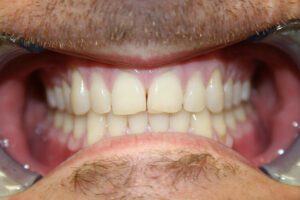
Periodontitis is a serious gum infection that destroys the soft tissue and bone that supports the teeth. Periodontitis can cause tooth loss or worse, an increased risk of heart attack or stroke and other serious health problems.Chronic peridontitis is a form of gum disease, it is a typical type that most adults older than age 35 have. It is an independent risk factor for head and neck squamous cell carcinoma. This proposes that increased efforts are needed to prevent and treat periodontitis, as it is a possible mean to reduce the risk of this form of cancer. Periodontitis that begins in childhood or early adulthood is called aggressive periodontitis.Prevent periodontitis; if you have it already, get treatment and maintain good oral hygiene,” said Mine Tezal, D.D.S., Ph.D., assistant professor in the Department of Oral Diagnostic Sciences, School of Dental Medicine and University at Buffalo, and NYS Center of Excellence in Bioinformatics and Life Sciences at the University of Buffalo.The characteristics of chronic peridontitis are progressive loss of the bone and soft tissue attachment that surround the teeth. The researchers assessed the role of chronic periodontitis on head and neck squamous cell carcinoma, as well as the individual roles on three subsites: oral cavity, oropharyngeal and laryngeal. They used radiographic measurement of bone loss to measure periodontitis among 463 patients; 207 of whom were controls.Results showed that chronic periodontitis might represent a clinical high-risk profile for head and neck squamous cell carcinoma. The strength of the association was greatest in the oral cavity, followed by the oropharynx and larynx.When the relationship by tobacco use was stratified, it was seen that the association persisted in those patients who never used tobacco. The researchers did not expect the periodontitis-head and neck squamous cell carcinoma association to be weaker in current smokers compared to former and never smokers. However, this interaction, although statistically significant, was not very strong.Tezal said that confirmatory studies with more comprehensive assessment of smoking, such as duration, quantity and patterns of use, as well as smokeless tobacco history are needed.The study also suggests that chronic periodontitis may be associated with poorly differentiated tumor status in the oral cavity. Continuous stimulation of cellular proliferation by chronic inflammation may be responsible for this histological type. However, grading is subjective and can only be observed through association in the oral cavity. Therefore, this association may be due to chance and further exploration is needed.Andrew Olshan, Ph.D., said these findings lend further support to the potential importance of poor oral health in this form of cancer. Olshan is professor and chair of the Department of Epidemiology at the Gillings School of Global Public Health, and professor in the Department of Otolaryngology/Head and Neck Surgery, School of Medicine, University of North Carolina at Chapel Hill.The study of poor oral health including the possible carcinogenic role of microorganisms is part of a rapidly growing interest in how a community of microbes that live in the various environments of the human body can affect health. Although the study is comparatively small, the researchers were able to also see an association between bone loss and the risk of head and neck cancer.Periodontitis is common but largely preventable. Periodontitis is usually the result of poor oral hygiene. Daily brushing and flossing and regular professional dental cleanings can greatly reduce the chance of developing periodontitis and the risk factors resulting due to this diseases especially cancer.

Different Types Of Oral Cancers And The Treatments

December 7, 2009

Cancer that forms in tissues of the oral cavity (the mouth) or the oropharynx (the part of the throat at the back of the mouth) is known as oral cancer.

Oral cancer is part of a group of cancers called head and neck cancers. Oral cancer can develop in any part of the oral cavity or oropharynx. Most oral cancers begin in the tongue and in the floor of the mouth. Almost all oral cancers begin in the flat cells (squamous cells) that cover the surfaces of the mouth, tongue, and lips. These cancers are called squamous cell carcinomas.

Oral cancer is largely a preventable disease with tobacco and alcohol use being the main risk factors. Cancers caused by smoking often take up to 30 years to develop, so tobacco is less likely to be the main reason behind the increase in oral cancer in people in their 40s compared with older people. In addition, since smoking rates have gone down and alcohol consumption has gone up, experts believe the increase in oral cancer rates could mainly be down to drinking.

When oral cancer spreads (metastasizes), it usually travels through the lymphatic system. Cancer cells that enter the lymphatic system are carried along by lymph, a clear, watery fluid. The cancer cells often appear first in nearby lymph nodes in the neck.
Cancer cells can also spread to other parts of the neck, the lungs, and other parts of the body. When this happens, the new tumor has the same kind of abnormal cells as the primary tumor. For example, if oral cancer spreads to the lungs, the cancer cells in the lungs are actually oral cancer cells. The disease is metastatic oral cancer, not lung cancer. It is treated as oral cancer, not lung cancer. Doctors sometimes call the new tumor “distant” or metastatic disease.
Oral cancer is classified according to two criteria:
1.    The cancer location: According to this criterion there are two types of oral cancer:
•    Oral Cavity Cancer: This starts in the mouth, which includes the tongue, lining of the cheeks, gums and teeth, upper or lower jaw, the hard palate (the mouth’s roof), the mouth’s floor (the area beneath the tongue), and salivary glands.
•    Oropharyngeal Cancer: The cancer that starts in the oropharynx, which includes the soft palates (the back of the mouth), the base of the tongue, uvula, and tonsils (one of two small masses of lymphoid tissue located on either side of the throat). Around two-thirds of the oral cancers are found in the mouth, while one-third are found in the pharynx.
2.    The cells where the cancer starts: There are two types of oral cancer:
•    Squamous Cell Carcinoma: This is a type of cancer that starts in the flat cells (called squamous cells) that cover the surface of the oral cavity and orophadynx. Squamous cells carcinoma represents more than 90 percent of all oral cancers. In its early stages, this cancer is confined to the lining layer of the cells and is called carcinoma in situ, but when it extends beyond the lining, it is called invasive squamous cell carcinoma.
•    Minor Salivary Gland Cancer: This is a type of cancer which starts within the salivary glands located in the oral cavity and orophadynx lining tissue. This is a rare type of oral cancer.
Oral cancers may look like open sores or discolored areas in the mouth. The most common signs of oral cancer are ulcers, sores, red or white patches in the mouth that last longer than three weeks and unexplained pain in the mouth or ear. Less common signs include a lump in the neck, a persistent sore throat or difficulty swallowing. If the biopsy shows that cancer is present, the doctor needs to know the stage (extent) of the disease to plan the best treatment. The stage is based on the size of the tumor, whether the cancer has spread and, if so, to what parts of the body. This may involve lab tests and endoscopy. Dental x-rays, chest x-rays, CT scan and MRI can also be conducted.
Treatment of oral cancers is ideally a multidisciplinary approach involving the efforts of surgeons, radiation oncologists, chemotherapy oncologists, dental practitioners, nutritionists, and rehabilitation and restorative specialists. The actual curative treatment modalities are usually surgery and radiation, with chemotherapy added to decrease the possibility of metastasis, to sensitize the malignant cells to radiation, or for those patients who have confirmed distant metastasis of the disease.