5 Top Foods Preventing Bad Breath
May 17, 2010
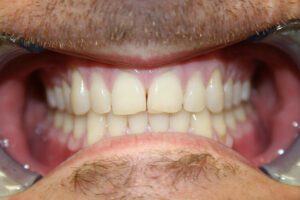
There are two main reasons why one can have bad breath – dental hygiene problems and gastrointestinal issues. This means that bad breath is originated not just because of improper oral hygiene, but also due to problems in digestive system. The main reason why these odors are formed is the same, i.e. bacteria. If we consult a doctor regarding our bad breath issue, he will first look at our diet. We are what we eat, so what we eat has a great impact on our breath, and hence personality. No one likes to sit with and specially talk to people who have a smelly breath. Now the question is, how do we get rid of bad breath? Besides eating a balanced diet with a lot of fresh fruit and vegetables, we can use some of the following tips:
Chew Fresh Herbs: According to Dr. Christine Gerbstadt, chewing fresh herbs such as parsley, coriander, spearmint, rosemary, tarragon, eucalyptus and even cardamom can be very effective in fighting bad breath. If you do not fancy chewing raw herbs, you can prepare tea by boiling any of these herbs in water. This way not only your breath smells nice, but your meal will also be properly digested.
Add Yogurt In Your Diet: Yogurt, besides being an excellent source of Calcium, is a great source of reducing bad breath. The reason for this is that yogurt is considered quite helpful in reducing the levels of Hydrogen Sulfide stored in different parts of our mouth. Hydrogen Sulfide causes bad breath. Yogurt, cheese and milk are normally recommended by dentists because these food items are rich in Vitamin D, and Vitamin D reduces the growth of bacteria in our body. Moreover, milk and yogurt also keeps our digestive track in order, due to which, bad breath is prevented.
Eat Fiber-rich Fruit And Vegetables In Your Diet: Fiber is an excellent source of scrubbing and cleaning your mouth. Fiber-rich fruit and vegetables like apples, oranges, carrots, mangoes, celery, etc, cleanse your mouth by creating more saliva than what other food items make. Also, these eatables help in the proper movement of food in digestive track as well as intestines, so there is no chance of food blockage and hence, production of bad breath.
Eat Food Rich In Vitamin C: Vitamin C is an excellent source of preventing the growth of bacteria in our mouth. Including oranges and other citrus fruit in your diet, along with berries and melons etc, mean minimizing bad breath, Vitamin C also prevents many gum infections, which eventually leads to minimizing bad breath.
Using Sugarless Gums And Mouth Fresheners: Although brushing your teeth after every meal is what every dentist recommends, sometimes we are unable to brush or floss our teeth. For this reason, we can go for some bad breath masking approaches, like eating sugarless gums or mints. Gums are good for exercising the jaw muscle, however, make sure that you chew sugarless gum, as sugar causes plaque, and there is no point storing plaque in your mouth when we know it makes our breath smell worse.
Immediate And Early Loading Of Implants
May 4, 2010
Instant dental implant has its pros and cons. Specialists on subject of implants have taken a view that immediate loading of implants can be riskier due to the undefined and unexplored diagnosis that relates to it. It is primarily because of this reason that general practitioners are not recommended to undertake such early implants. Having said it, it is anticipated that a revolutionary diagnosis and treatment in such implants will be available to the masses soon.
Osseointegration is basically a reaction that the bony tissues show as a result of the implants to the affected area. There is a healing period span of around three to six months for implants relating to oral endosteal before loading and considered to be pre-requisite for maximum bone apposition vis-à-vis the fixture (however, in many studies on animals and humans, such three to six months healing period was cut short to an early loading protocol. In other instances, implants were forthwith loaded and on the same day of insertion). The aforesaid method was derived from the workings of Branemark somewhere in the 1970s, who worked on the healing of upper and lower jaw and its proposed time frames, on the basis of failure frequencies relating to such surgeries.
The aforesaid practice on Osseointegration was conducted in varying adverse conditions and concurrently the different implants and their modes kept on changing, for example with patients who had degenerating bone quality, using implants of shorter lengths, lower than maximum implant designs and surgical procedures etc.
Regarding the healing of bone post implant placement surgery, there are numerous viewpoints. It is opined that reaction known as perimplant bone reaction, instantly after the surgery, is at its optimum and reduced with the passage of time. Even after the lapse of three to six months standard healing time frame, the remodeling of the bone would continue to occur.
Hence, in view of the foregoing, it will not be reasonable to ascertain a generic healing period with respect to the type of a certain jaw.
Best way to determine the healing period is to physically examine the implant and bone concerned before as well as after the surgery. Certain new ways of such measurements are because traditional methods of evaluating peri-implant bone conditions (such as X-rays, percussion and turn out tests etc) are unsuitable for this measurement, Hence, new methods are now being resorted to which includes resonance frequency analysis as introduced by in 1996 by Meredith and others and the cutting resistance measurement in between implant placement as introduced in 1994 by Johansson & Strid.
It is believed that the above two relatively newly introduced methods provide an objective view of the stability of the implant whereas the earlier methods were solely based on subjective grounds.
Osseointegration method (as based on the notion of late loading for a span of about twenty years) is subject to doubts by numerous quarters.
The case selection relating to operator based case is based on subjective grounds, as is evident from all the modes adopted as of late. Those based on the objective criteria, it is being said, have not been published.